33rd Reconfigurable Architectures Workshop
Official website: raw.necst.it
May 25th-26th 2026. New Orleans, USA
The 33rd Reconfigurable Architectures Workshop (RAW 2026) will be held in New Orleans, USA in May 2026. RAW 2026 is associated with the 40th Annual IEEE International Parallel & Distributed Processing Symposium (IEEE IPDPS 2026) and is sponsored by the IEEE Computer Society and the Technical Committee on Parallel Processing. The workshop is one of the major meetings for researchers to present ideas, results, and on-going research on both theoretical and practical advances in Reconfigurable Computing.
A reconfigurable computing environment is characterized by the ability of underlying hardware architectures or devices to rapidly alter (often on the fly) the functionalities of their components and the interconnection between them to suit the problem at hand. The area has a rich theoretical tradition and wide practical applicability. There are several commercially available reconfigurable platforms (FPGAs and coarse-grained devices) and many modern applications (including embedded systems and HPC) use reconfigurable subsystems. An appropriate mix of theoretical foundations and practical considerations, including algorithms, applications, architectures, technologies, systems, programming models and tools, is essential to fully exploit the possibilities offered by reconfigurable computing. The Reconfigurable Architectures Workshop aims to provide a forum for creative and productive interaction for researchers and practitioners in the area.
Applications of Reconfigurable Architectures
- ML/AI Acceleration
- Big Data Analytics Acceleration
- Applications in FinTech
- Applications in Organic Computing, Bio-Inspired Solutions, and Neuromorphic Computing
- Applications in Computational Genomics, Healthcare, and Biomedical Vision
- Applications in Autonomous Driving
- Applications in Digital Media and Entertainment
- Applications in HPC and Datacenters
- Applications in Edge Devices and IoT Devices
- Applications in Cybersecurity
- Other Novel Use of Commercial FPGAs
Reconfigurable System Architectures & CAD Support
- Domain-Specific Architectures and Overlays
- Coarse-Grained Reconfigurable Architectures
- Specialized Memory Systems including Volatile, Non-Volatile, and Hybrid Memory Subsystems
- Near Data Reconfigurable Architectures and Systems (e.g., SmartNIC, SmartSSD)
- Reconfigurable Datacenters and Cloud
- FPGA-based MPSoC Architectures and Systems
- Heterogeneous Systems
- Emerging Technologies (e.g., Quantum, Optical Models, 3D Interconnects, Devices)
- Other Evolvable, Adaptable, or Autonomous Reconfigurable Computing Systems
- Low-Level CAD Support for the above Architectures and Systems
- Critical Issues (Security, Reliability, Fault-Tolerance)
Software Programmability and Tool Support
- Domain-Specific Languages and Compilers
- High-Level Synthesis
- System-Level Synthesis
- Runtime Systems
- Operating Systems and Virtualization
- Debugging and Verification Tools
- Runtime Reconfiguration Models
- Partial Reconfiguration Techniques
- Fast Simulation, Prototyping, and Profiling Tools
- Other Tool Support to Facilitate Software-Defined Reconfigurable Computing
RAW 2026 Call for Papers
TRETS Special Issue on RAW 2026
After two successful years, we will continue to push for a journal special issue. For RAW 2026, we are collaborating with ACM TRETS to organize a journal special issue. We will invite top papers from the RAW 2026 program to extend their work and submit to the ACM TRETS special issue on RAW 2026.Submission of Papers
All manuscripts will be reviewed by at least three members of the program committee, with a single-blind review process. Submissions may be full papers (up to 6 pages) or short papers (up to 4 pages), formatted using the IEEE conference template. : single-spaced, double-column pages using 10-point size font on 8.5X11 inch pages. The page limits exclude references and both manuscripts can include up to 2 pages of references. Templates are available:LaTeX: here
Overleaf: here
Word: here
Papers are to be submitted through Linkings. All papers must be submitted electronically in PDF format. Submitted papers should not have appeared in or be under submission for a different workshop, conference or journal. It is also expected that all accepted papers (full or short) will be presented at the workshop by one of the authors.
Publication and Journal Special Issue
IEEE CS Press will publish the IPDPS symposium and workshop abstracts as a printed volume. Proceedings of the workshops are distributed at the conference and submitted to IEEE Xplore. Top papers will be invited to submit extended versions to the ACM TRETS special issue on RAW 2026.Awards
RAW 2026 will have 3 different awards:
- Best paper (selected after the presentation of the 3 best paper candidates)
- Best poster (selected among all the poster presentations at RAW 2026)
Call for Ph.D. Forum
The Reconfigurable Architectures Workshop (RAW) will continue with its third edition of the Ph.D Forum. The forum is an excellent opportunity for PhD students to present their research and engage with the broader reconfigurable computing community. PhD students conducting research in reconfigurable computing and related fields are invited to participate in the poster session, where they can share their work, exchange ideas, and receive feedback from experienced researchers and peers.
To apply for the forum, prospective participants will be required to submit a two-page extended abstract using IEEE conference standard template. Please highlight the student and the advisor(s) in the submission.
Deadline: Apr 20, 2026 May 4, 2026
How: send an email with subject: "[RAW 2026 - PhD Forum]" to neha.prakriya@amd.com
Artifact Evaluation
RAW 2026 will continue the experimental Artifact Evaluation (AE) initiated in RAW 2023. Authors of accepted papers at RAW 2026 can optionally participate in the AE process to formally describe supporting materials (code, data, models, workflows, results).
Artifacts are digital objects that were created by the authors as part of the research or experiments performed with the submitted work. Examples of artifacts are:
- Software: models, source code, scripts, Makefiles, container images (like Docker files), etc.
- Hardware: Verilog, VHDL, schematics, CAD tools, flows, etc.
- Data: spreadsheets, databases, binary files, design sets, etc.
High-quality artifacts are as important as the manuscript itself. The goal of submitting artifacts promotes the availability and reproducibility of the experimental results and data such that other researchers can repeat experiments and replicate results with less effort.
Note that this submission is voluntary and will not influence the final decision regarding the papers. The goal is to help the authors validate experimental results from their accepted papers by an independent AE Committee (AEC) in a collaborative way while helping readers find articles with available (i.e., publicly accessible in an archival repository), functional (i.e., consistent, documented, and reusable), and validated (i.e., main results from the paper) artifacts.
Each submitted artifact is evaluated by at least two members of the AEC. During the process, authors and evaluators are allowed to communicate anonymously with each other to overcome technical difficulties. Ideally, we hope to see all submitted artifacts successfully pass the artifact evaluation. More details on the AE process will follow, and in the meantime check the FAQ.
Finally, we are seeking volunteers to take part in the AE Committee. If you are interested in taking part in this initiative please consider submitting your candidacy or those of your students. Please contact the Program Chairs. A form will be shared ahead of time.
Program
Monday, May 25th
| 8:30 – 8:45 | Registration | |||
| 8:45 – 9:00 | Opening Session | |||
| 9:00 – 10:00 | Keynote — Cong Hao: "Agile Hardware Kitchen: Tools for Architecture Innovation" | |||
| 10:00 – 10:30 | Coffee Break | |||
| Datacenters and High Performance Reconfigurable Architectures — Session Chair: Paolo Palazzari | ||||
| 10:30 – 11:00 | RAW-09 | 100 Gbps Hash-Based Reconfigurable Pattern Matching Best Paper Candidate | Magnus Östgren, Anna-Maria Unterberger, Ioannis Sourdis | Regular |
| 11:00 – 11:30 | RAW-08 | Using FPGA-based Network-Attached Accelerators for Energy-Efficient AI Training in HPC Datacenters | Niklas Schelten, Steffen Christgau, Merit Hutzler, Philipp Kreowsky, Marco de Lucia, Bettina Schnor, Hannes Signer, Johannes Spazier, Benno Stabernack, Serhii Yahdzhyiev | Regular |
| 11:30 – 11:45 | RAW-17 | From Algorithm to RTL: A Comparative Study of Compiler-Driven and LLM-Driven FPGA Design Flows | Md Mahfuzul Haque Gazi, Rickard Ewetz, Hao Zheng, Md Rubel Ahmed | Short |
| 12:00 – 13:30 | Lunch Break (not included) | |||
| Exploring AI Accelerators in the Wild Reconfigurable World — Session Chair: Aman Arora | ||||
| 13:30 – 14:00 | RAW-18 | Configurable Architecture Design Automation (CADA) – Enabling Efficient, Dynamically Reconfigurable Systems Best Paper Candidate | Tim Ling, Jack Burd, Dejan Markovic | Regular |
| 14:00 – 14:30 | RAW-10 | A Power-Centric Methodology to Characterize Edge AI SoC with Limited Telemetry Capabilities Best Paper Candidate | Giulio Mantovi, Davide Paltrinieri, Giuseppe Sorrentino, Christian Pilato, Davide Conficconi | Regular |
| 14:30 – 15:00 | RAW-15 | Design Space Exploration of Convolutional Neural Network Accelerators for Predictive Maintenance | Florian Rokohl, Sudatta Mondal, Edris Zaman Farsa, Marc Reichenbach | Short |
| 15:00 – 15:30 | Coffee Break | |||
| Posters and PhD Forum — Session Chair: Neha Prakriya | ||||
| 15:30 – 17:00 | Introduction for Poster Session | |||
| 15:30 – 17:00 | RAW-03 | Comparing High-Level Synthesis and RTL for Simple FPGA Kernels – Revisited | Vinicius R. Fertrin, Christopher D. Gill, Roger D. Chamberlain | Poster |
| RAW-04 | Hokidachi: Low-Latency Random Forest Inference on FPGAs through Full Horizontal Parallelism | Andrea Bellocci, Alessandro Verosimile, Marco Domenico Santambrogio | Poster | |
| RAW-06 | A Minimal and Jitter-Free FPGA Telemetry Core for Cycle-Accurate Determinism in Real-Time Systems | Ceren Korkmaz, Busra Bulut, Ayse Yayla | Poster | |
| RAW-07 | A Lightweight Slow Control Interlock System targeting the European GateMate FPGA | Daniel Anders, Vitalii Burtsev, Daniele Passaretti, Christof Pfannenmueller, Fabian Lurz, Thilo Pionteck | Poster | |
| RAW-11 | End-to-end Reconfigurable Rack-Scale Systems | Cullen Bash, Ray Beausoleil, Pedro Bruel, Chris Davidson, Aditya Dhakal, Rolando Pablo Hong Enriquez, Marco Fiorentino, Jim Ignowski, Keith McAuliffe, Dejan Milojicic, Alok Mishra, Viyom Mittal, Chandrakant Patel, Sudeep Pasricha, Pavana Prakash, Gourav Rattihalli, Duncan Roweth, Samantika Sury, Bassem Tossoun, Alex Veprinsky, Jason Zeiler | Poster | |
| RAW-12 | High-Performance Hyperspectral Brain Tumor Analysis on Versal ACAP | Dismas Ezechukwu, Mark Sears, Chenfeng Zhao, Dinesh Bhatia | Poster | |
| RAW-13 | A Hierarchical Methodology for Hardware Design Exploration of Mathematical Kernels | Angelos Ioannou, Mario Vega, Fabien Chaix, Dania Mosuli, Blair Reasoner, Tan Nguyen, Xiaokun Yang, John Shalf, Doru Thom Popovici | Poster | |
| RAW-19 | A Persistent-State Dataflow Accelerator for Memory-Bound Linear Attention Decode on FPGA | Neelesh Gupta, Peter Wang, Rajgopal Kannan, Viktor Prasanna | Poster | |
| — | HW-SW Co-Design Techniques for DT-Based Ensemble Models on Embedded Systems | Alessandro Verosimile, Marco D. Santambrogio | PhD Forum | |
| — | Unleashing Heterogeneous Systems Capabilities to Enhance Compute-Intensive Workloads | Giuseppe Sorrentino, Davide Conficconi | PhD Forum | |
| — | Soft-Error Tolerance Evaluation for a Triple Modular Redundant Serial Communication System | Utsuki Sekioka, Minoru Watanabe, Nobuya Watanabe | PhD Forum | |
| — | AI Workload Acceleration through Semantic Preserving Hardware Generation | Md Mahfuzul Haque, Md Rubel Ahmed | PhD Forum | |
| End of Day 1 | ||||
Tuesday, May 26th
| 8:30 – 9:00 | Registration | |||
| 10:00 – 10:30 | Coffee Break | |||
| 10:30 – 12:00 | Keynote — Vito Giovanni Castellana: "Democratizing Hardware Design: Open Source Solutions for Open Innovation" | |||
| 12:00 – 13:30 | Lunch Break (not included) | |||
| From Methodology to Implementations: A Journey to the Center of the FPGA World — Session Chair: Xinyao Yi | ||||
| 13:30 – 14:00 | RAW-14 | Programming Domain-Specific FPGA Hardblocks from HLS: An RTL Blackbox Approach | Ruthwik Reddy Sunketa, Jeevesh Choudhury, Aman Arora | Regular |
| 14:00 – 14:30 | RAW-02 | Pipelined FPGA Implementation of the QP-DYN Cipher with Scalable Dynamical System Parallelism | Paolo Palazzari, Luigi Accardi, Pasquale Tommasino, Alessandro Trifiletti | Regular |
| 14:30 – 15:00 | Awards and Closing Ceremony | |||
| 15:00 – 15:30 | Coffee Break | |||
| 17:00 – 18:10 | Panel: "Extending the lifespan of supercomputers: Experience, Challenges and Opportunities" — by IPDPS | |||
| 18:10 – 18:30 | TCPP Announcement and Awards | |||
Regular Short Poster PhD Forum Best Paper Candidate
Keynotes
Monday Keynote: Agile Hardware Kitchen: Tools for Architecture Innovation
Abstract: As hardware systems continue to scale in complexity—from high-level synthesis to chiplet-based and 3D architectures—architectural innovation is increasingly constrained by slow, rigid, and fragmented design tools. In this talk, I introduce the Agile Hardware Kitchen, a suite of open-source tools developed by the SHARC Lab to enable fast, accurate, and scalable hardware architecture exploration. The talk highlights OmniSim, which provides near-C-speed simulation with RTL-level timing accuracy for complex HLS designs; LaZagna, an end-to-end framework for exploring physically realizable 3D FPGA architectures from architectural specification to RTL and bitstream generation; Omelet, a packaging-aware 2.5D/3D chiplet system interconnect simulator to provide high-fidelity early-stage design space exploration; and open infrastructures that support reproducible and ML-driven HLS research. Together, these efforts aim to lower the barrier to hardware architecture research, accelerate design iteration, and enable a more open and agile future for computing systems.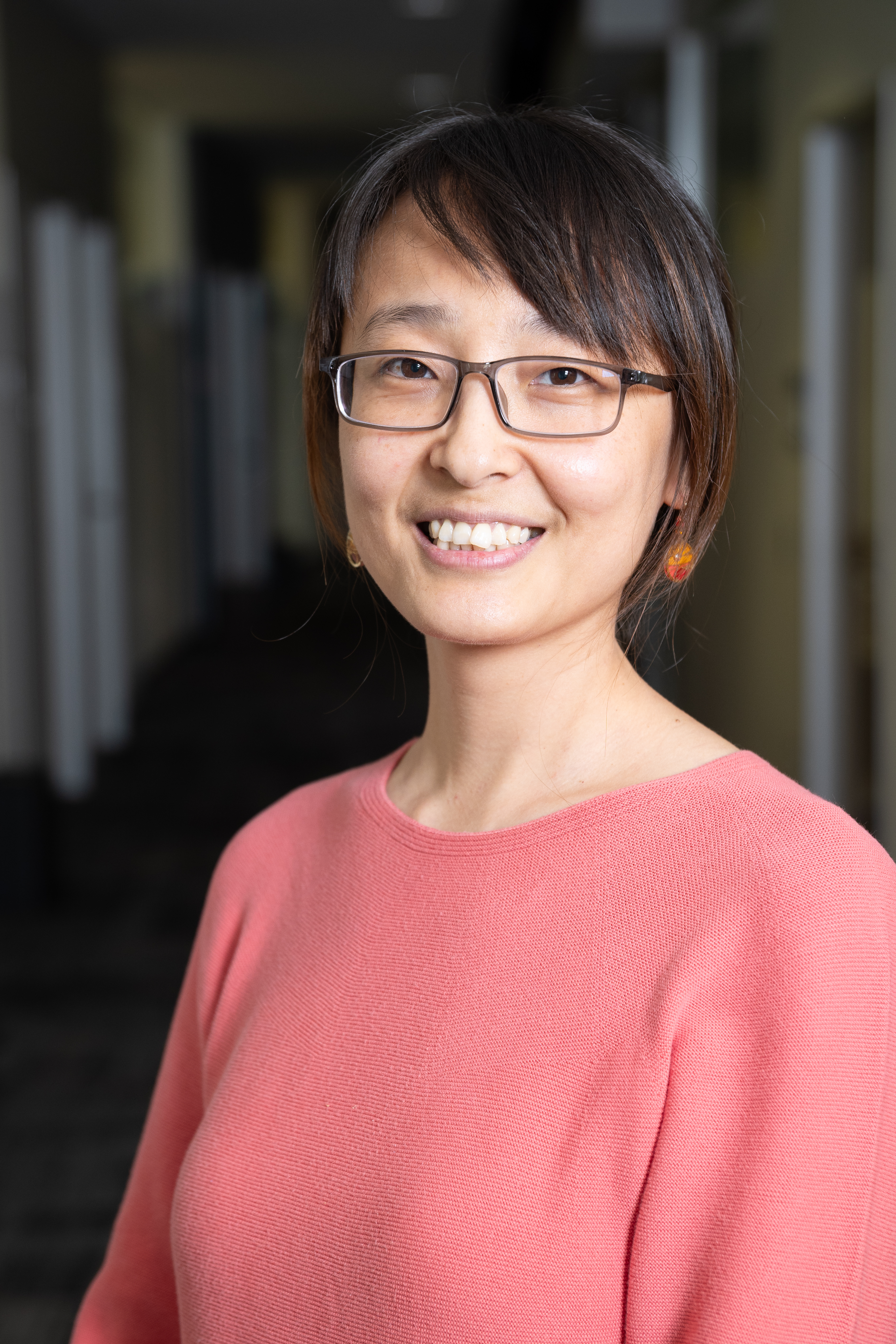
Speaker Bio: Dr. Cong (Callie) Hao is an Assistant Professor in ECE at Georgia Tech with the ON Semiconductor Junior Professorship. Her research spans reconfigurable computing, hardware-aware machine learning, and electronic design automation, with a focus on software/hardware co-design and high-efficiency systems.
Tuesday Keynote: Democratizing Hardware Design: Open Source Solutions for Open Innovation
Abstract: Reconfigurable computing combines the flexibility of software with the performance of specialized hardware by allowing computing architectures to be dynamically adapted to specific applications. Orthogonally, technologies such as FPGAs, are ideal platforms for the rapid prototyping of hardware concepts or innovative designs. Design automation plays a pivotal role in the process of deploying such artifacts, and while great advances have been made over the last decades, still there is a missing link connecting design intent to functional prototype and optimization, especially in the open domain. In this talk, Dr. Castellana will walk through real world applications which demand hardware acceleration, proposing architectural and design optimization solutions. He will discuss the urgence of open source ecosystems, including and beyond reconfigurable hardware targets. Finally, he will emphasize the role of AI in the next generation of hardware design methodologies.
Speaker Bio: Dr. Vito Giovanni Castellana is a senior computer scientist with the Future Technologies Group at Pacific Northwest National Laboratory, which he joined in 2012. He holds a MSc and PhD degrees in computer science and engineering from Politecnico di Milano, Italy. His research interests include design automation, accelerators hardware design, graph and big data analytics, runtime systems, and, parallel programming models. Castellana is an active promoter of and contributor in open source projects as instruments for advance in science: he is lead designer and developer of the SHAD programming library, and, major contributor of the GMT runtime system, Bambu HLS, and the SODA compilation infrastructure.
Organization
Workshop Chair
- Marco Domenico Santambrogio, Politecnico di Milano, Italy
Program Co-Chairs
- Atefeh Sohrabizadeh, NVIDIA, California
- Davide Conficconi, Politecnico di Milano, Italy
Steering Committee
- Juergen Becker, Karlsruhe Institute of Technology, Germany
- Viktor K. Prasanna, University of Southern California, USA
- Ramachandran Vaidyanathan, Louisiana State University, USA
- Marco D. Santambrogio, Politecnico di Milano, Italy
Steering Chair
- Viktor K. Prasanna, University of Southern California, USA
Artifact Evaluation Chair
- Francesco Peverelli, Huawei Research, Switzerland
PhD Forum Chair
- Neha Prakriya, AMD
Publicity Co-Chairs
- Brian Veale, IBM, USA
- Christian Pilato, Politecnico di Milano, Italy
Webmaster
- Francesco Pesce, Politecnico di Milano, Italy